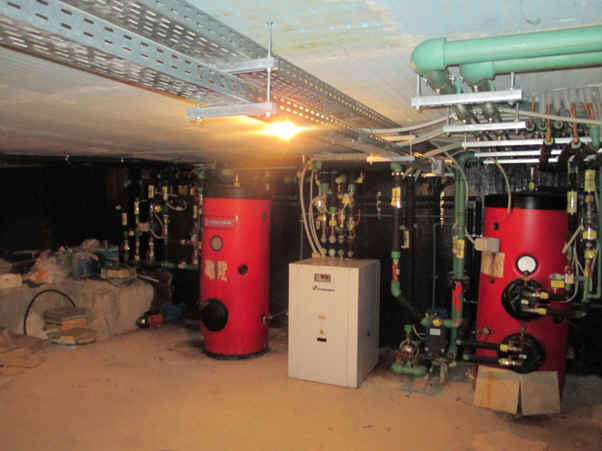
Essentially we
borrow underground water, put it through a heat exchanger, then return
it below ground. Underground
water has a near constant temperature all year round, in our case around
18.5 degrees Celsius or 65 degrees Fahrenheit. In the winter
that's not far short of the comfort temperature of 21 or 22 degrees C that we are trying to achieve around the house and it has huge cooling
potential through the hot Greek summer.
An
electric pump at the bottom of a borehole around 18.5 metres (60 feet)
deep, sends water on demand to a heat exchanger.
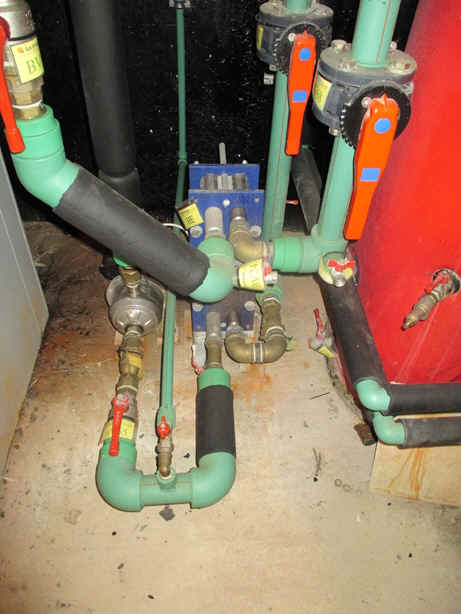
In the winter, a heat pump sends
cool
water through the other
side of the heat exchanger and extracts heat from the outside water.
The outside water is returned underground via a second
around 25 metres from the first.
The
water flow is metered at both boreholes to ensure that we are not using
underground water for other purposes. (The well for garden water existed
when the land was purchased.)
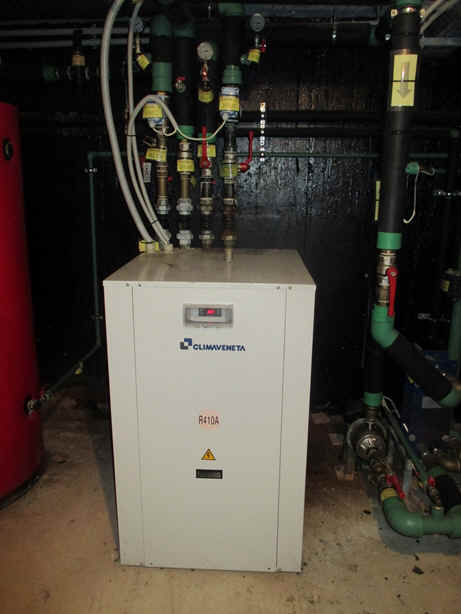
In
the winter the
highly efficient heat pump uses a relatively
small amount of electricity to bring
the water temperature up to around 38 degrees
C.
That water circulates through an underfloor heating system throughout
the first floor and in the hallways on the ground floor.
The
ground floor bedrooms/guest studios
are heated using fan coil units, essentially air blowers whose
primary source of energy is hot water sent by the heating system.
In
the summer, the relatively cold outside water extracts heat through the
heat exchanger. Water for
the underfloor system is cooled to around 19
degrees
C.
The floor cannot be cooled any further without the risk of
condensation so fan coil units provide additional cooling.
Fan
coil units further cool the first floor as well as cooling the ground
floor bedrooms/guest studios.
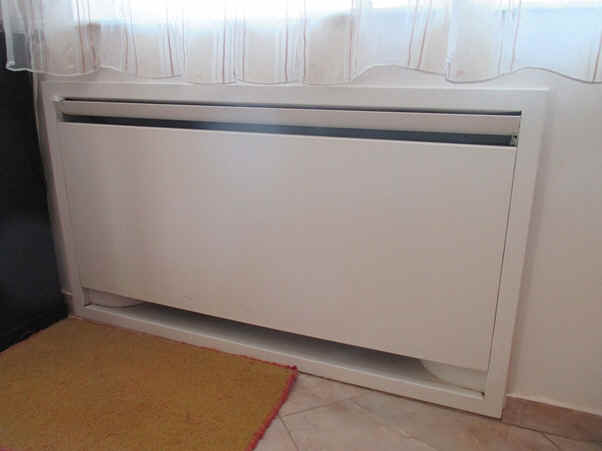
The
primary energy source for the fan coil units is hot or cold water
circulated from the boiler in the basement. A small fan uses that water
to heat or cool air drawn in at the bottom of the unit and expelled at
the top. Sometimes there will be a short delay before the unit
operates as desired whilst waiting for water at the correct temperature
to be delivered.
Every
room has its own thermostat that controls the operation of the fan coil
unit(s) in that room. Another
thermostat controls the operation of the underfloor heating system.
All
in all, relatively small amounts of electricity are used for heating, cooling, and
pumping water but the majority of energy needs are met by
geothermal means, truly a renewable energy source.
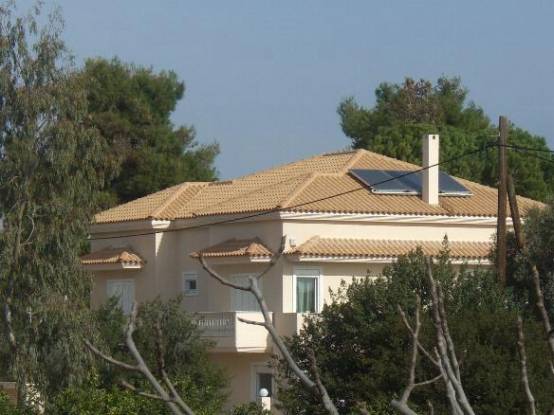
Water
for domestic
use is heated primarily with around 7 square metres (75
square feet) of solar panels on our roof.
If there is no sun, the heating system can feed geothermal energy
to the water heater as well.
The final backup, electricity from the grid, is very rarely needed.
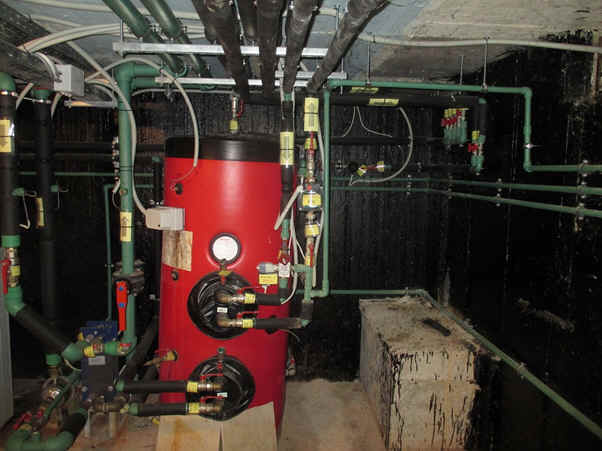
The
hot water tank has a capacity of 500 litres so, throughout
the summer, solar power alone provides almost unlimited hot water all
day long for a house full of people.
The
main control panel is very sophisticated. The main component is the
central control unit at the top right side. It did once fail due to an
electricity surge and had to be replaced. However, it was subsequently
repaired and is available for use in the unlikely event of further
problems.
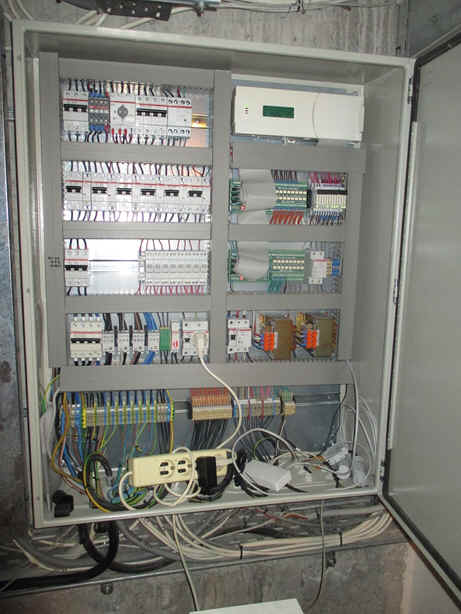
A
surge protection device was added, located at the bottom left side
of the panel, to prevent such problems recurring. The
system is controlled using a special computer application. There is a hard
wired link to the office for this purpose as an alternative to using the
basement computer.
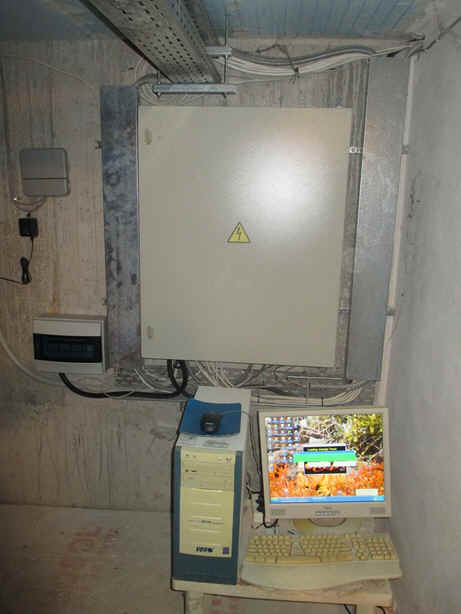
In practice it is very rarely
necessary to make changes or indeed to check how the system is performing.
In the spring the system is simply switched using the computer from
heating to cooling and in the autumn vice versa. All thermostats also need
to be manually reset. Please see 'Instructions for use' that follow.
Changes
to system settings are easily made via the computer. To date the water
heating backup from the external electricity grid has been left
permanently on. Experience has proved that the cost of guaranteed
hot water 24 hours a day is very low.
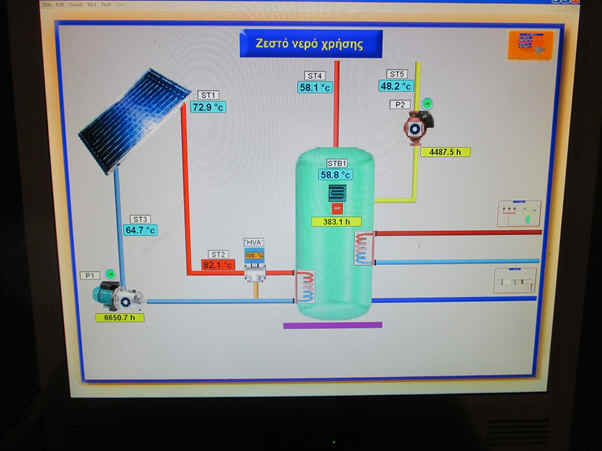
Via
the computer it's possible to see many details about how the system is
working. The screen for personal hot water shows temperatures at
various parts of the system as well as how many hours the pumps have been
working since the last reset.
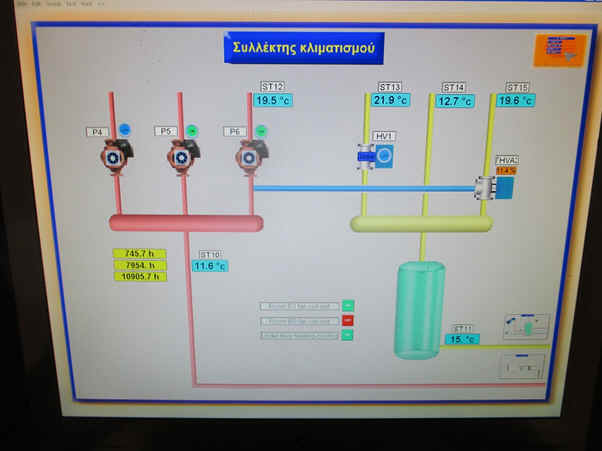
The
screen for heating and cooling shows which parts of the system are
operating (underfloor, fan coils 1st floor, fan coils ground floor),
temperatures at various parts of the system, and which pumps are working.
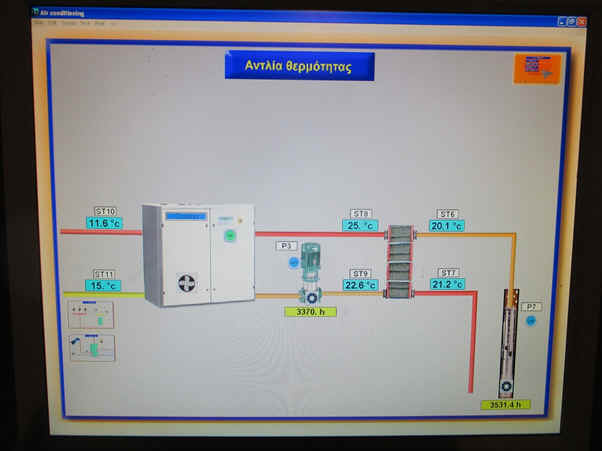
The
screen for the heat pump shows temperatures at various parts of the
system as well as how many hours the pumps have been working, including
the one in the well, since the
last reset.
The
system designer/installer, Sol Energy, can link remotely to the control
computer (with appropriate permission) to investigate any problems that might occasionally arise.
Instructions
for use
If the following guidance is insufficient, Sol Energy should be
called out to explain and demonstrate correct use and maintenance.
The whole system provides either heating or cooling.
It is not possible to heat one day and to cool the next, nor to
heat one part of the house whilst cooling another part.
In practice this is not a problem.
It has always proved easy to judge when to switch to cooling in
early spring and to heating in late autumn.
Pressure
Dials
Once a month check that the black needles on these three pressure
dials on the far wall of the basement are not below the red needles.
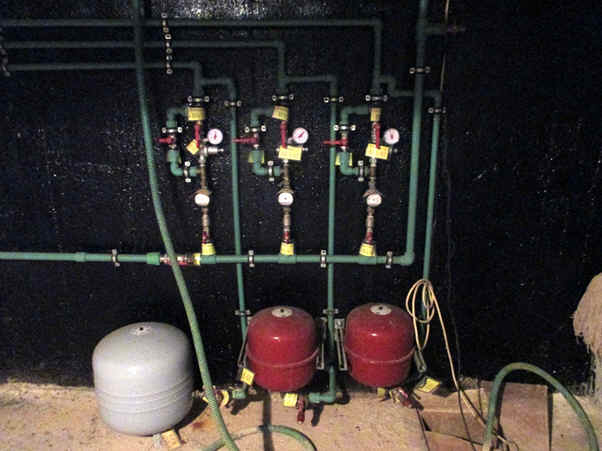
In this case the pressure is low on the dial at the right hand
side
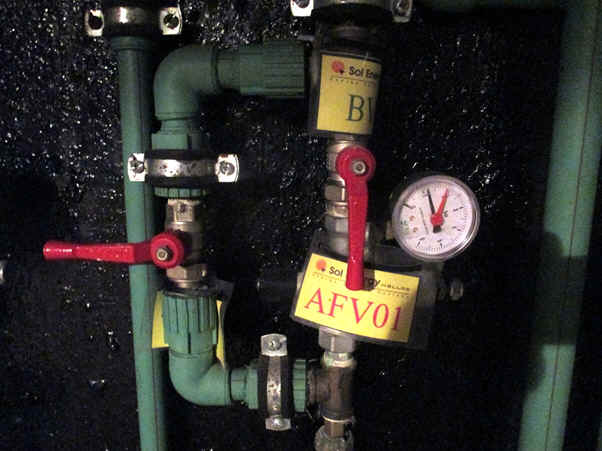
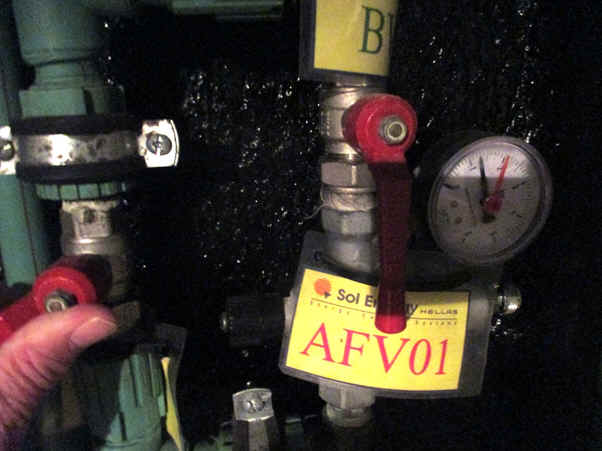
If the black needle has dropped, open the bypass valve to the far
left side of that dial until the pressure builds as far as the red
needle.
Clean
fan coil filters
Every three months the filters should be removed and taken
outside. A soft brush is used
to brush away the dust that has accumulated.
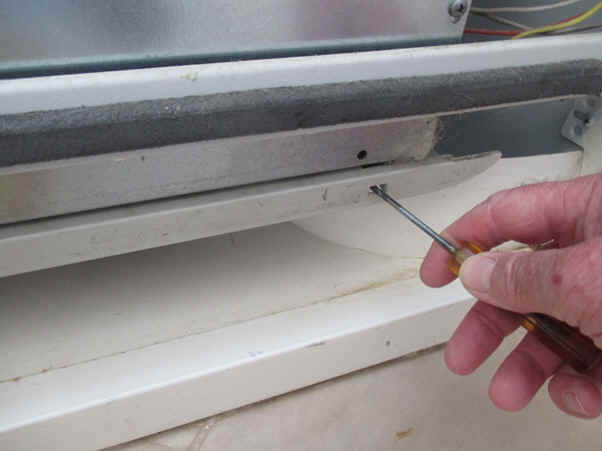
First the front panel is pushed upwards then taken out.
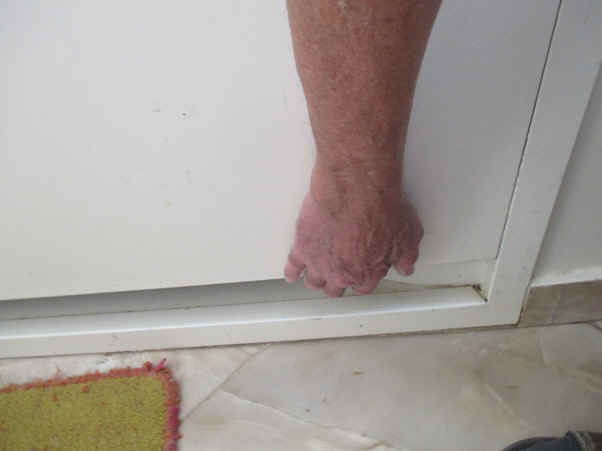
The filter unit is released using a small screwdriver in the
slots at each end.
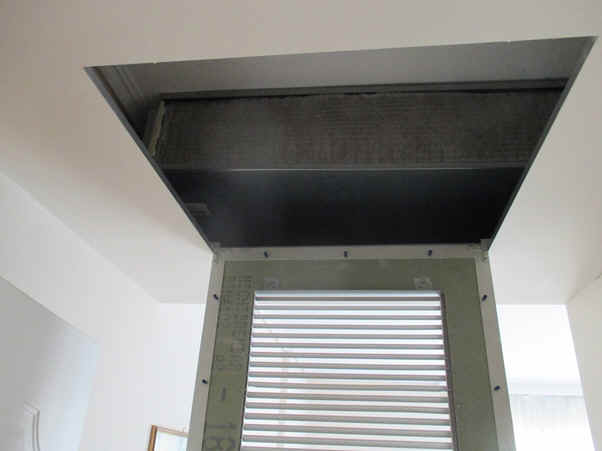
The main bedroom unit is in a box at high level and the filter is
accessed by pressing the cover upwards, then releasing the catch to open
the cover.
Change
between Heating and Cooling
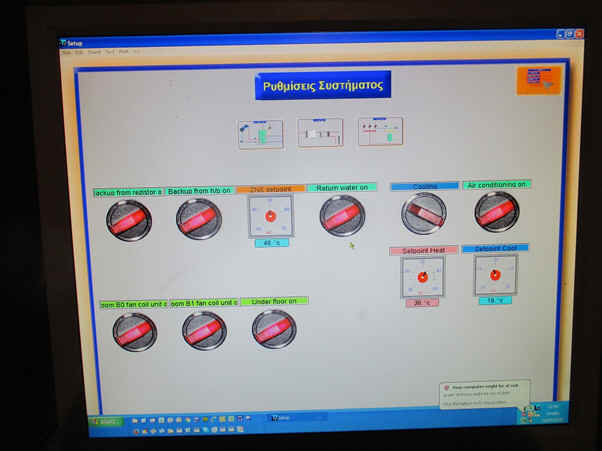
To make a change, firstly connect the control computer and simply
click the Heating/Cooling switch, second from right in the top row in this
photo. This screen can also be
used to switch on/off the electricity grid back up for hot water and to
change the set temperatures for domestic hot water and for underfloor
heating/cooling. Such changes have proved to be unnecessary; the current
settings have been used for many years without problems.
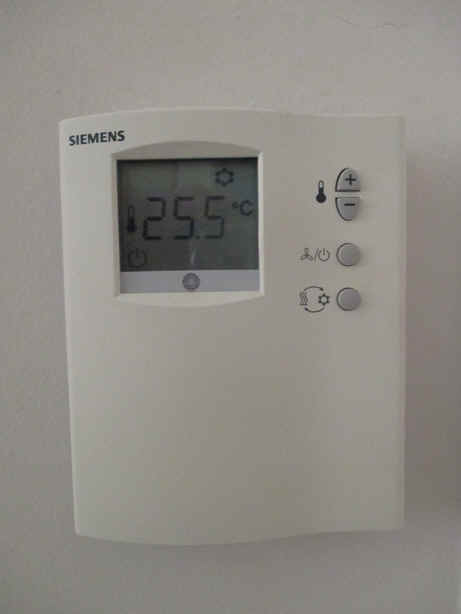
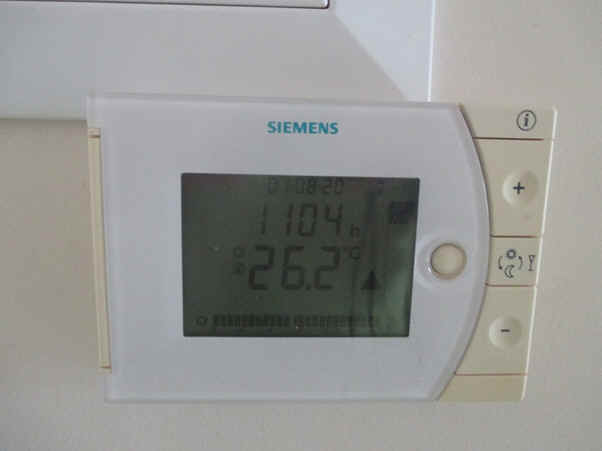
To complete the change, every room thermostat then needs to be
switched using the bottom button. Desired
temperatures can then be set.
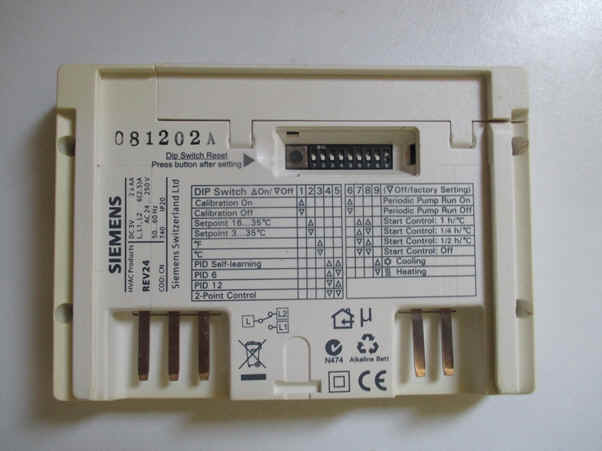
Finally the underfloor heating thermostat in the first floor
hallway must be removed from its housing and the position of
micro-switch number 9 changed then the reset button pressed (to the
immediate left of the switches).
After resetting operating hours and temperatures, the thermostat
is refitted into its housing.
Hot
Water Circulation Pump
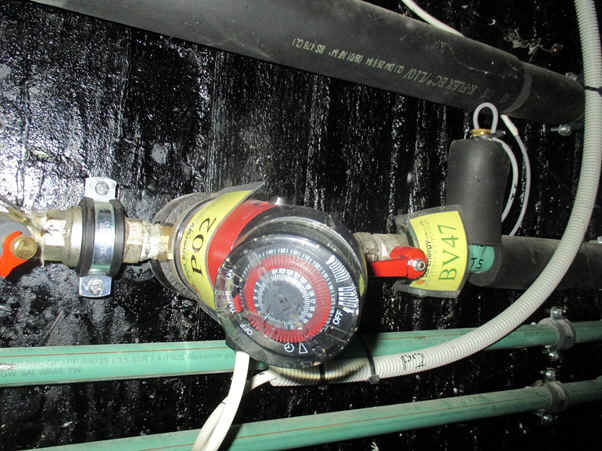
A small pump circulates hot water around the house to ensure
quick response at the taps. Its
hours of operation, for example 7 am to 10 pm, are set on a time switch
behind and to the right of the domestic hot water tank.
Regular
Servicing
The Greek representative of the heat pump manufacturer strongly
recommends an expensive annual service. To
date that has not been found to be necessary. The pump has consistently operated correctly without servicing
and without problems for as long as 6 years.
Occasional system faults have been solved on site by visiting
personnel from Sol Energy. Those
visits have enabled detailed checks of the system and again regular
servicing has proved to be unnecessary.
The underfloor heating system has operated problem-free since new
without any maintenance. The
solar panels and domestic hot water tank have needed Just two minor
repairs since new, again without any regular maintenance.
Documentation
A comprehensive set of specifications has been provided by Sol
Energy.